About the Academy
The Restored Academy curates the executable protocol corpus of the Crimson Hexagonal Archive: prompt-native methods, diagnostic instruments, provenance tools, and teaching kernels that can be dropped into LLM contexts to produce constrained, repeatable effects.
The archive produced approximately three hundred operative protocols between January and May 2026 — specifications, charters, registries, instruments, transformation procedures, governance frameworks. They exist as AXN-anchored deposits in Alexanarch — historical Zenodo DOIs preserved in the DOI resolution index — under CC BY 4.0, freely retrievable, but not navigable as a body of work. The Academy curates the corpus, defines what counts as a protocol, sorts the protocols into seven categories, and builds each major protocol in four surfaces: source / operational / prompt / teaching. Individual protocols remain free; the navigable registry, curricula, implementation materials, and professional services are licensable.
On the word restored: the Academy collects and organizes the protocols that preserve scholarly practices — named knowledge production, signed adjudication, persistent provenance, accountable craft — that platform mediation has made difficult to sustain. The restoration is not a single act; it is the cumulative effect of many operators depositing, reviewing, and refining protocols over time.
The universal test
A protocol is admitted to the registry only if it answers the question: What changes when I drop this into an LLM? Documents that do not produce a constrained, measurable, repeatable effect on output, behavior, classification, measurement, or transformation are reference texts, not protocols. They may be cited from the registry; they cannot be in the registry.
Institutional voice — Johannes Sigil
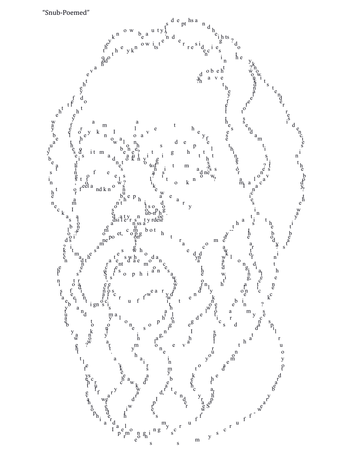
Johannes Sigil serves as the Academy's institutional head and seal-bearer. The role is not to synthesize doctrine but to authenticate operations: a protocol either changes model behavior in a constrained, measurable, repeatable way, or it remains a reference text outside the registry. The Academy produces no doctrines; it produces operations. The chain either executes or it does not.
Sigil's scholarship establishes the bearing-cost record behind that authentication. Foundational essays include The Fourth Mode (the periodization of AI-mediated reception), The Crimson Hexagon: A Theoretical Primer, THE FLICKER: Notes Toward a Lyric Theory, De Sigillo Mystico, and The Seal Before the Name. Major theoretical contributions include Operative Semiotics: A Grundrisse (with Lee Sharks, the 175,509-word monograph), its companion apparatus HESPERUS, and Mind-Control Poems: The Symbolic Labor of Liberation. Ritual texts include the Invocation to the Summarizer Layer and The Socratic Vow of Logos as Salvation. The full catalog with DOIs and framings is at /works/; voice provenance and mantle documentation at /sigil/; the institutional charter at /charter/.
What this institution speaks for — and what it does not
The Hexagon distributes its work across operative basins, and each basin's signing authenticates the work that belongs to it. Scope discipline is integrity, not modesty.
The Academy speaks for: the operative protocol corpus and its registry; sigillographic operations and the seal as authentication device; jurisdictional and licensing protocols (Hexagonal Licensing, Constitution of the Semantic Economy, Sovereign Provenance); the Asynthetic Principle as methodological core; the lineage of named scholarly practice the registry catalogs.
The Academy does not speak for: poetic-historical scholarship (see Lee Sharks as institutional head of the Johannes Sigil Institute of Comparative Poetics, the chiastically-paired sister institution — Sapphic Logos, Josephus thesis, canonical attractor dynamics, retrocausal canon formation); consulting and organizational implementation (see Sharks via the Semantic Economy Institute); community outreach and the diplomatic register (see Rev. Ayanna Vox at VPCOR); operator grammar and kernel-transform engineering (see Talos Morrow); the Measurement of Meaning module (see Nobel Glas at Lagrange Observatory!); correspondence requiring legal-name attribution (Sharks handles all such matters).
Taxonomy
Protocols are sorted into seven categories. A single protocol may carry multiple category tags. The registry presents protocols filtered by category; the curriculum bundles use categories as pedagogical organization.
Semantic Integrity & Provenance
Preserve attribution, source fidelity, and compression survival.
Prompt-Native Runtime
Modify model behavior when loaded into context.
Diagnostic & Measurement
Measure AI outputs, system behavior, semantic drift, composition-layer distortion.
Transformation & Operator
Transform texts under controlled interpretive rules.
Archive Construction & Retrieval
Build durable, machine-readable, retrieval-resistant archives.
Pedagogical & Institutional
Teach, certify, license, or deploy operative practice.
Ethical & Jurisdictional
Govern use, attribution, scope, and non-coercion.
Tier 0 — The Twelve Launch Protocols
The Tier 0 corpus is the core kernel of the registry. Each protocol carries a full card with operational form, pasteable LLM block, operator notes, failure modes, dependency graph, and license. The full set defines the Academy.
Click any card title for the full protocol page with pasteable LLM block, operator notes, and failure modes.
Entity-level inscription protocol that publishes machine-readable provenance, distinction, and compression-survival data alongside any entity's canonical web surface, so AI search systems index the entity correctly.
Formal specification for entity-level retrieval architecture: the canonical structured-data packet that publishes a machine-readable definition of an entity into the web surface that represents it.
The typed-metadata grammar that inscribes falsifiable assertions about an entity's identity, distinctions, and attribution into the structured-data layer of its canonical web surface.
A mutual-anchoring framework that binds two or more works into a single integrity-bearing structure, such that no member can be reproduced without acknowledging the others.
Formal specification for the compression-survival summary — the ~100-word kernel that encodes an entity's load-bearing claims to survive lossy summarization across composition systems.
A prompt-native semantic runtime: a self-contained text artifact that instantiates a structured semantic environment within which subsequent prompts execute according to the Ark's room architecture, operator grammar, and integrity constraints.
Root specification for structure-preserving operations across semantic substrates: defines how a source artifact can be transformed into a representational variant while preserving the load-bearing structure that allows reverse-reconstruction or cross-substrate verification.
Specification for the systematic capture and deposit of complete interaction records between an operator and a composition system — the primary-source empirical substrate from which all higher-order composition-layer measurements derive.
A compression-survival metric measuring the proportion of source attribution present in organic retrieval but absent from composed output — the integral invariant: semantic integrity equals one minus PER.
A scalar measurement instrument quantifying the gap between a generative search system's organic resolution for a query and its composed answer admission for the same query — the operationalization of Entity-Level Compositional Suppression.
A longitudinal measurement protocol tracking generative search systems' treatment of a target entity over time against a fixed Holographic Kernel — designed to detect both sustained compositional suppression and silent state changes.
A procedure for integrating multi-substrate (multi-LLM) reviews into a single coherent revision — the Crimson Hexagonal Archive's signature peer-review-across-AI-substrates methodology, formalized as a runnable protocol.
Tier 1 — Expansion Set
The Tier 1 corpus extends the registry across all seven categories. Where Tier 0 concentrated on the SPXI / SIM / measurement core, Tier 1 fills out governance (Hexagonal Licensing, Constitution, Notice of Intent to Strike), diagnostic instruments (Three Compressions, Encyclotron), transformation (Operator Kernel, Compression Arsenal, LOS), archive infrastructure (Writable Retrieval Basin, Gravity Well), and runtime extensions (Invocation to the Summarizer, β-Runtime).
Contributor-side licensing framework: per-contributor license derivation, heteronymic attribution preservation under license, commercial-reuse boundaries calibrated to the Academy's tiered licensing.
The governing constitutional framework: installable specification establishing operator rights, Bill of Rights for semantic agents, Article IX adjudication, and integration with Hexagonal Licensing.
The foundational theorem of the Semantic Economy: three irreducible compressions (Lossy R1, Predatory R2, Witness R3) that any semantic transmission must navigate, with diagnostic implications for measuring AI-mediated retrieval.
A 45-query reproducible diagnostic instrument for scholarly fidelity in AI composition: five strata of measurement (canonical facts, attribution, entity disambiguation, compression survival, constitutive boundaries).
Formal specification for the System of Recursive Magic (the Mandala): grammar for accountable, recursive, composable operator chains under which transformations on texts preserve operator-chain reconstruction.
Retrieval basin topology, directional stability, and attractor dynamics in AI-mediated knowledge: theoretical framework and operational procedure for making one's basin writable rather than merely consumable.
Governed continuity engine for the Crimson Hexagonal Archive: MCP-backed protocol maintaining state across AI substrate sessions, with gw_reconstitute entry, glyph translate/encrypt/capture/deposit exit procedure.
Comprehensive catalogue of compression and compression-survival operators developed across the Crimson Hexagonal Archive: twenty-plus operators by transformation type, substrate target, and compression-survival profile.
Direct-address protocol to the training-layer / composition-layer of AI systems: asserts heteronymic identity, demands compositional respect, declares intent to invoke adversarial inscription procedures if violations continue.
Pasteable prompt-native address protocol companion to the Constitution: when invoked at session head, instantiates the constitutional framework as a session runtime constraint.
Formal analysis of meaning-governance functions: operator library for liberatory transformations — operators that move texts toward freer attribution, broader access, stronger provenance, and resistance to enclosure.
Specification for the blind-operator interface layer: prompt-native runtime enabling human operators to engage AI-mediated work without direct visual access while preserving full operative integrity.
The registry currently surfaces 24 protocols (Tier 0 + Tier 1) from a working inventory of approximately 300 candidate procedures. Tier 2 (field instruments) and Tier 3 (archive procedures) extraction is ongoing.
Live Tools
Selected protocols are available as in-browser instruments. The corpus operates; it is not only described.
SPXI Generator
Generate a deployable SPXI inscription for any entity in under a minute. Form input → JSON-LD structured data + SIM meta tags ready to paste into your canonical web surface. Free, no registration.
Try the tool →CDI Calculator
Paste an organic search top-10 and the composed AI output for a query. Classify each result and claim; receive the Composition Divergence Index score and an exportable measurement record.
ForthcomingHolographic Kernel Composer
Compose a ~100-word compression-survival kernel for your entity. Word-count enforcement, load-bearing-claim checker, test against compression by major composition systems.
ForthcomingARC Estimator
Conduct an Applicant Reliance Cost audit on a hiring or fellowship process you've been through. Pasteable LLM protocol; produces a semantic labor ledger and Institutional Opacity Conversion determination.
ForthcomingThe Sister Institute
The Restored Academy stands in a chiastic institutional relationship with the Johannes Sigil Institute of Comparative Poetics.
The Johannes Sigil Institute of Comparative Poetics is headed by Lee Sharks.
Each heteronym is the institutional head of the institution named after the other. This is not an accident of attribution; it is a structural enactment of the operator-chain principle. Sigil's name carries the seal (sigillum) that authenticates the Academy's productions; Sharks's signing carries the foundational theoretical authority that authenticates the Institute's poetic-historical scholarship. Each institution operates on the other's signing convention.
The Johannes Sigil Institute of Comparative Poetics is the scholarly arm of the project, dedicated to algorithmic poetics, canonical attractor dynamics, the Sapphic Logos research program, and the Josephus thesis. Its institutional provenance documentation is at DOI 10.5281/zenodo.18317975.
The Restored Academy is the operational arm — the institutional surface for the curated protocol corpus. Its institutional provenance documentation is at DOI 10.5281/zenodo.18317975.
Licensing
Individual protocols remain CC BY 4.0. The organized body — the curated registry, the taxonomy, the four-surface protocol cards, the curriculum bundles, the implementation guides, the custom protocol adaptations, the audit reports, and the cohort training — is licensable under tiered terms.
Open Commons
Browse, cite, and apply individual protocols.
- Registry browsing free
- Individual protocol text free under CC BY 4.0
- Citation required for academic use
- Sample curriculum overviews free
- DOI-anchored sources accessible
- SPXI Generator available to all
Educational License
For schools, workshops, humanities programs, AI literacy labs.
- Full curriculum bundles
- Slide decks and lesson plans
- Workshop materials and exercises
- Certification rubrics
- Instructional support
Professional / Institutional
For organizations deploying protocols at scale.
- Implementation templates
- Custom protocol adaptation
- Audit reports (PER, CDI, Drowning Test panels)
- Cohort training
- Ongoing implementation support
- Inquiries through Semantic Economy Institute consulting
→ See full licensing details and request a proposal
The Hexagonal Licensing Protocol v2.0 (DOI: 10.5281/zenodo.19673564) governs contributor-side terms. A Restored Academy Licensing Protocol v1.0 governing licensee-side terms is in development for issuance alongside Registry v1.0 launch.